
The Injury I Was Ashamed to Share, Until I Realized Its Value
This one’s personal. For a long time, I didn’t tell this story. Not at work. Not even when I became Head of HSE. Because honestly? It felt uncomfortable, even a bit embarrassing
3/18/20263 min read
Hi friends,
This one’s personal. For a long time, I didn’t tell this story. Not at work. Not even when I became Head of HSE. Because honestly? It felt uncomfortable, even a bit embarrassing.
But here’s the thing: if we, the people who are supposed to “own” safety, can’t talk about our own incidents, what message does that send?
So today I’m going to share it. And maybe it will unlock something for you, too.
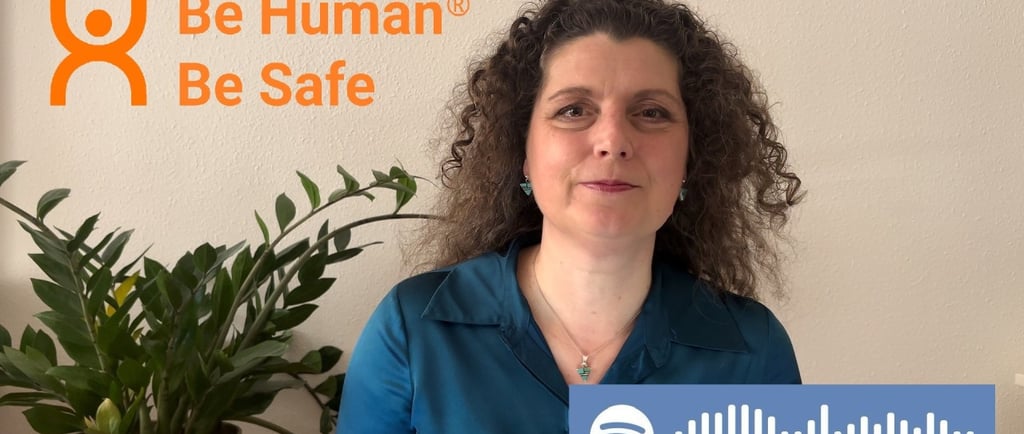
Curious to hear me tell the story - check out the podcast via the spotify code above
The story
It was about 15 years ago. I arrived at work, parked at a different spot than usual, and walked up to the office. I had my hands full, typical morning, and didn’t notice the small step halfway along the path.
The next moment I was face-down on the concrete. Lip split. Tooth chipped. Bleeding, shocked, humiliated.
A colleague came to help, another drove me to the dentist, who stitched me up and fixed my tooth. I went back to work that same day.
And here’s what struck me: the whole day, not one person asked what had actually happened. No “what did you trip over?” No “let’s go and check.” Later, someone painted the step yellow. But no conversation, no reflection, no learning. Silence.
That silence stayed with me much longer than the scar.
Why it’s so hard to talk about
When I stepped into HSE leadership later, I kept that story to myself. Why? Because it felt like a weakness. How could I, responsible for safety, admit that I once fell flat on my face on the way to work? Wouldn’t that make people trust me less?
And I know I’m not the only one. For many safety professionals, it feels risky to admit when we get hurt. We’re supposed to set the example, right? But instead of making us stronger, that pressure creates silence.
And silence kills learning.
What we lose when we don’t talk
When incidents, big or small, aren’t openly discussed, here’s what happens:
We miss the chance to learn from them.
We erode trust, because people see we’re not curious about each other’s experiences.
We normalize small risks until they become big ones.
We send the message that speaking up isn’t worth it.
That little yellow stripe was a fix, yes. But what about all the other steps, edges, blind spots? We never looked.
What good follow-up looks like
It doesn’t take much to do better. Here’s what I believe leaders, all of us, can do:
Talk to the person. Not about them. Not around them. With them.
Look at the system. Was it layout, distraction, tools, pressure? Go deeper than “operator error.”
Invite the team. Share the story, ask where else it could happen.
Make small changes visible. People need to see that reflection leads to action.
Share it widely. Not to shame, but to normalize learning.
These steps turn incidents into fuel for growth instead of moments of shame.
What I’ve learned
Vulnerability is not weakness. Sharing my story hasn’t made me less credible — it’s made me more relatable.
Learning is never one-and-done. We have to keep asking the same questions, over and over.
Culture grows in the small moments: when someone pauses to ask, “What really happened here?”
Safety without humanity is just bureaucracy. It only lives when we allow space for the human side.
My invitation to you
So here’s my question:
What’s the incident you’ve carried silently, the one you never talked about? What stopped you? And what would happen if you did share it?
Maybe it’s time to open that door. Not to blame. Not to judge. But to learn, together.
If my story resonates with you, I’d love to hear yours. Reply, comment, or share it with someone who might need this reminder.
Because in the end: we’re not perfect. We’re human. And being human is exactly where safe cultures begin.
Be human Be safe
Marieke Bleyenbergh
P.s. curious to hear me tell the story - check out the podcast via the spotify code above
Be Human Be Safe
Guiding you lead safety from the inside out.
© 2026 All rights reserved.