 NL
NLHuman-centric leadership capability for the realities of high-hazard work.
Be Human Be Safe is a human-centric leadership capability and transformation practice for organisations where decisions carry real human and operational consequences. Founded by Marieke Bleyenbergh, it connects executive perspective, operational experience and practical methods that organisations can continue to use themselves.
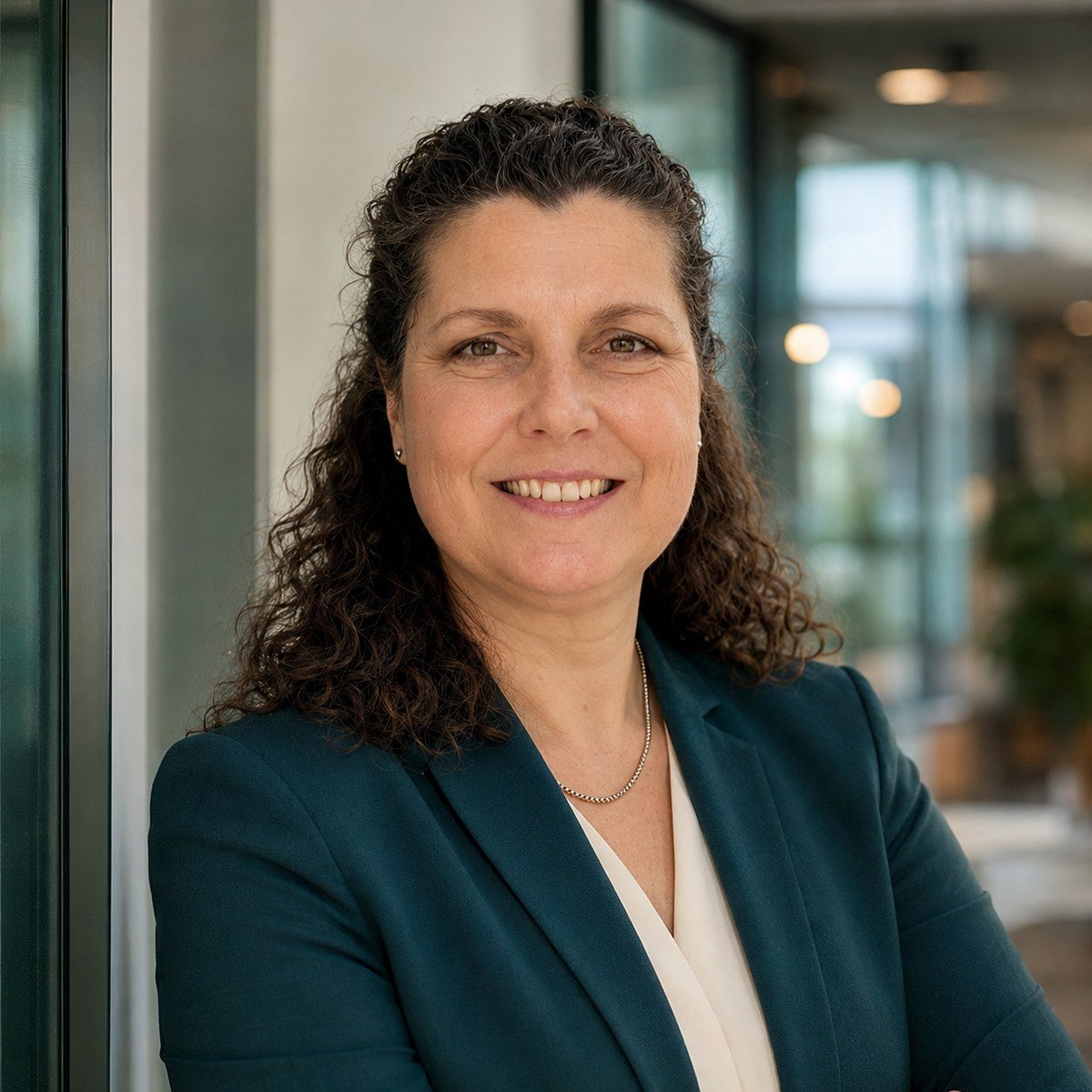
I develop the leadership capability through which systems, work and results improve.
I spent the first half of my career inside some of the world's most complex industrial organisations. Shell. AkzoNobel. Energy, petrochemicals, specialty chemicals, paints and coatings, cleantech. My roles ranged from frontline site operations to board-level strategy, often at the same time, and I saw both what was possible and what consistently got in the way.
What I kept noticing, across every site and every sector, was the same pattern. The organisations with the best outcomes were not the ones with the most procedures. They were the ones where people felt genuinely safe to speak up, where leaders paid attention to the signals before an incident rather than the report after one, and where safety, performance and wellbeing were never treated as separate agendas.
That insight is what Be Human Be Safe is built on: developing leaders who can connect what has become fragmented, improve systems, shape the conditions of work and turn necessary change into better results. Safety is the origin and proving ground, while the same capabilities strengthen production, quality, engineering, innovation, improvement and organisational performance.
"See the whole before improving the parts."
Two moments, about ten years apart.
About ten years into my career, I took operational responsibility for a new site. Within the first month, a toxic gas release sent workers scrambling down scaffolding, barely escaping a cloud drifting toward the trailers. Nobody was seriously hurt. I was physically sick. Not from the gas. From the weight of understanding, in your body, what it means to be responsible for people.
On a different site, during a maintenance job, a frontline worker said to me: "Nobody has ever asked us whether we can actually do this job well, or what makes it hard."
Those two moments are the foundation of everything that followed. People are not the risk to be managed. They are the answer waiting to be heard. If you do not feel that responsibility somewhere in your body, this is probably not the right work for you. I have never stopped feeling it.
I have been the parent company. I have also run the business standing on its own.
As VP Safety and Environment at Shell and Director EHS at AkzoNobel, I was part of the group structure that standalone sites and businesses rely on. Technical authority, audit programmes, the quiet second opinion that is always available until it is not.
As interim CEO of Pryme, the first industrial-scale advanced plastics recycling plant, I ran a standalone operation without that scaffolding. I know exactly what a business loses when it stands on its own, because I have carried the accountability for it directly.
Those two experiences look nothing alike from the inside. Knowing both is what makes the work possible.
H.U.M.A.N.™
H.U.M.A.N.™ is the Be Human Be Safe response-and-learning framework for how leaders and organisations handle error, uncertainty and unwelcome information. It translates a realistic understanding of human fallibility into five practical moves.
From that foundation, F.L.O.W.™ strengthens influence, S.A.F.E.™ develops leadership behaviour and C.H.A.N.G.E.™ helps organisations make new ways of working sustainable.
Explore the full Be Human Be Safe ecosystem →From frontline to boardroom, and back again.
My career spans energy, petrochemicals, specialty chemicals, paints and coatings, manufacturing and cleantech. I have worked from frontline operations to executive leadership and supported complex global organisations.
At Shell, I served as VP Safety and Environment for the Downstream business. At AkzoNobel, I was Director EHS across 140 manufacturing sites during a significant period of organisational change. At Pryme, I stepped in as interim CEO to run the first industrial-scale advanced plastics recycling plant. Each role required me to work simultaneously at a strategic level and in the operational reality where decisions are actually made.
My formal foundation includes an MSc in Chemical Engineering from Eindhoven University of Technology and governance development through Women on Boards. Further development in speaking, influence and personal change strengthens how I help leaders connect technical judgement, human behaviour and organisational reality.
Extensive training in personal change and human behaviour also informs the work. It helps me look beyond skills alone to the beliefs and automatic responses that often determine what leaders do under pressure.
Be Human Be Safe works globally, in English, Dutch and German, across the full range of high-hazard and complex industrial sectors, based in Delfgauw.
Be Human Be Safe helps leaders build the coherence, capability and trust that let people, performance and purpose thrive together.
Especially when everything around them is changing.